By: Kevin Corrigan
He ended a star studded decade long career in 1990 with a collection of medals and honours that none of the current generation will match: Two All-Ireland senior, seven Leinster senior and two All-Star awards – both All-Ireland medals and All-Stars were won in 1981 and 1985 while he collected Leinster medals in 1980, 1981, 1984, 1985, 1988, 1989 and 1990 during a quite sensational decade for Offaly hurling as they won their first provincial title in 1980.
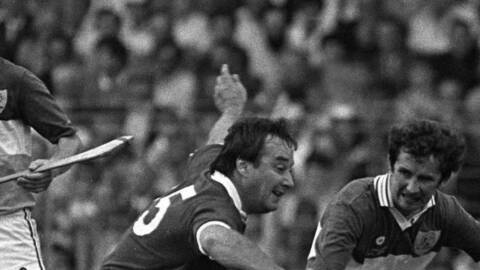
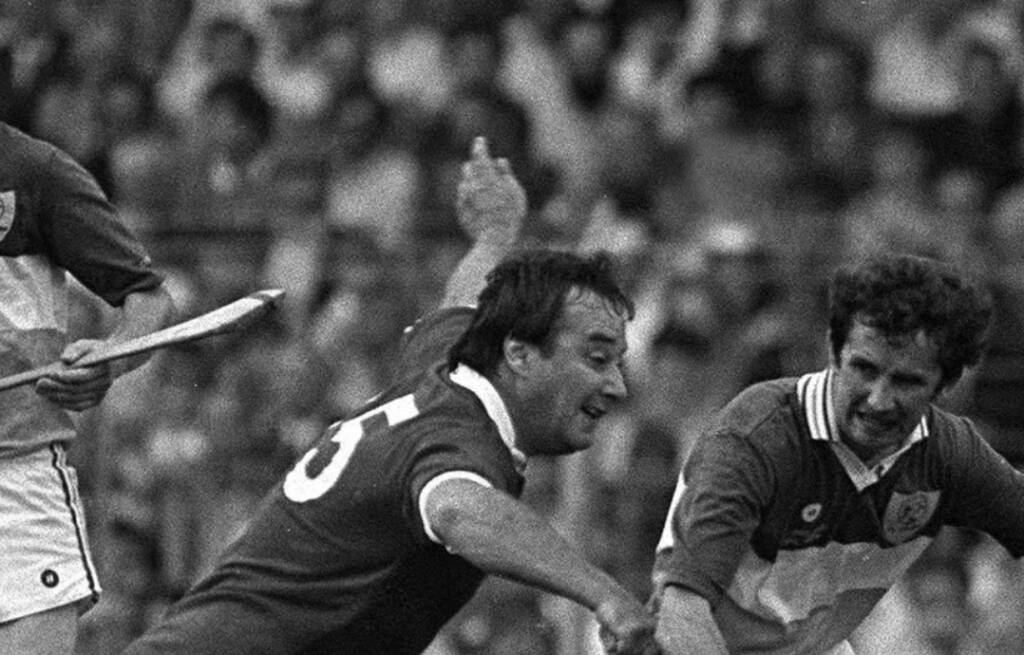
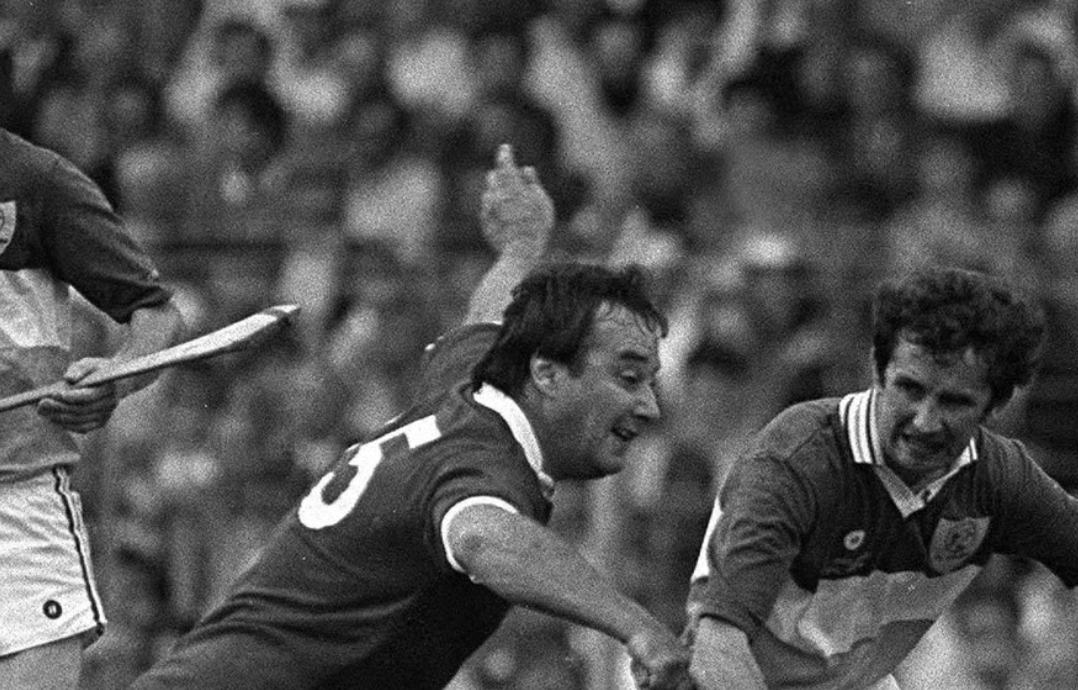
Ger Coughlan made his debut in 1979 and his last game was a heavy All-Ireland semi-final defeat by a then exceptional Galway outfit in 1990. He came up just short of the century of competitive Offaly appearances and was an absolute hero to supporters.
The first thing that struck you about Ger Coughlan in his heyday was his size. At 5 feet 5 and weighing just nine stone, he was almost always the smallest, lightest man on the field but he was invariably one of the biggest performers, a man who produced when the pressure was most severe, the stakes at their highest. He was a magnificent wing back, skilful, fast and he had the heart and guts to match. When the ball was there, he pulled and his own safety never entered the equation
A true winner, all of those qualities endeared him to supporters who were privileged to witness the great years of the 1980s and he was one of the stars of a never to be forgotten period as the game hurling transitioned from the old physicality and brawn of earlier decades to the more nuanced, fast paced, athletic one that it became.
A fiercely proud Kinnitty man, he won Senior Hurling Championship medals with them in 1978, 1979, 1983, ’84 and ’85. In such an honour laden career, there shouldn’t be many big regrets but two come up very quickly in any discussion with this devoted hurling man:
One is their failure to add a third All-Ireland senior hurling medal between 1988 and 1990 when they won the Leinster title for three years in a row for the only time but failed to reach an All-Ireland final – losing to Galway in 1988 and 1990 and taken out by Antrim in the shock of the decade in 1989.
The single biggest regret, however, remains the centenary All-Ireland final defeat to Cork in Thurles in 1984 – a huge occasion for the GAA as the final was brought to its birthplace in Thurles to commemorate the centenary of their 1884 foundation.
Having won their All-Ireland in 1981, Offaly had lost to Kilkenny in the 1982 and 1983 Leinster finals – most traumatically in 1982 when they had victory snatched from their grasp by a controversial late Matt Ruth goal, scored after Damien Martin appeared to have guided the ball out over the end line.
Chasing a partner to go with their 1981 win, Offaly captured their third Leinster title in 1984, beating Dublin and then Wexford by a point in a teak tough tussle that swayed and flowed all the way to the final whistle. They destroyed Galway in the 1984 All-Ireland semi-final, 4-15 to 1-10 and the county got carried away on a mass of hysteria, a sense of confidence that was never seen before or since about their victory prospects.
While Cork were preparing for their third All-Ireland final in a row and were desperate not to suffer a hat-trick of losses having went down to Kilkenny in 1982 and ’83, Offaly players were being told by supporters that they were unbeatable and could not lose.
As Ger Coughlan remarked last week, they were the proverbial “sitting ducks” and Cork, one of the most traditional of hurling forces, duly took them out, 3-16 to 1-12. Coughlan still grimaces as he recalls all that happened between the All-Ireland semi-final and final – the hype that eventually overwhelmed, the chances missed and the mistakes made on the day, the things that went wrong before hand.
The blame was a collective one with both players and management having to share equal responsibility. Every training session in Tullamore was attended by hundreds of believing supporters, there was a big crowd at an ill advised challenge game against Westmeath in Rath in the build up to it – Westmeath facilitated Offaly with the game but were long out of the championship and Offaly were able to do as they wished, adding to the confidence of supporters.
It reached farcical levels on the morning of the game. As Cork prepared quietly and hid away in a Convent near Thurles, the Offaly team bus was held up in traffic in the town, excited supporters waving and cheering them – as the players tried to relax in a Thurles hotel before hand, they were surrounded by thirsty supporters, keen to wish them well and tell them how good they were
“It was the only time our supporters got carried away in the wave of it. They were not saying to us, this is going to be tough or hard, they were saying, ye are going to win the All-Ireland. Ye are incredible. We had come through two massive wins, a great one over Wexford and an overwhelming one against Galway, which we never used to do. We would win the hard way.”
It was all a recipe for disaster and Offaly ended up a badly beaten side, though the final scoreline does not tell the true story – behind by 1-5 to 0-7 at half time, Offaly had ample chances to be in control, missing two-three easy goal chances and a handful of tap over points.
It went wrong in the second half and it was all an anti-climax for the Offaly support. “If you look at it, we hadn’t the strike force up front,” he remarked.
Afterwards, in classic GAA fashion, the pre-match euphoria was replicated by the post match despondency and fallout. Players were vilified and team management were hauled over the coals for some of their selections: the decision to play a very talented, natural young Kinnitty wing back Liam Carroll at corner back was debated by some – in his debut season, he was thrown in at the deep end on one of Cork’s most experienced players, Seanie O’Leary. A classic poacher, O’Leary ended up a match winner with 2-1 and Carroll never really recovered from the experience, playing a couple of handful of games in 1985 and 1986 but not establishing himself before eventually drifting off the scene.
The omission of Offaly’s elder statesman Johnny Flaherty was another source of discontent – then very much in the Winter of his career, Flaherty was often the X factor for Offaly and could have done for them what O’Leary did at the other end.
For understandable reasons, Ger Coughlan did not wish to talk about team selection and individual players but he gave a great insight into the whole year and what went wrong in an hour long chat last week.
Despite the 1982 and 1983 Leinster final losses, the squad didn’t feel any “great pressure” at the start of the year – “We had two Leinsters out of four and then in ’84 we won the Leinster so that was three in five years when we had no Leinster’s before,” he noted.
The 1984 Leinster final win over Wexford remains one of his great hurling memories. “That was a great match. Us as players remember that match, the ball just never stopped going, it was moving at a phenomenal rate. That was a really, really good Wexford team, they had beaten Kilkenny. They were an unlucky team around that time, they had a very good team, some great players.”
Offaly were Wexford’s big nemesis in the 1980s. They met four times, three of them in Leinster finals and each an Offaly victory – Offaly won by two points in the 1981 Leinster final, one point in 1982 and 1984 and their biggest winning margin was four in the 1988 Leinster final.
Offaly fell over the line a couple of times against Laois in those years, especially in a long talked about 3-20 to 6-10 1981 win while they were taken to a replay in 1982. Coughlan and Offaly, however, never unduly concerned themselves about Laois but Wexford always got maximum attention.
“If we were being fair about it, Wexford were a team we got a little bit of luck with up and down. Laois had some individually great players but they were just a bit short in certain areas at the time. We would have always had ourselves set completely for Wexford, we mightn’t have ourselves 100% set for Laois. That being said, Laois had something, they had Critchley and Taylor and those lads, Bohane’s and the Cuddy’s. They were exceptional but parts of their team possibly caught them out up and down.”
Offaly were delighted to get over Wexford and felt “very good about ourselves” in the following days. “We felt confident and it brought us on a good bit,” he recalled but the All-Ireland semi-final exhibition against Galway transformed their year very much for the worse.
“We put on a bit of an exhibition because Galway weren’t that good. We hammered them and things went really well for them. All of a sudden we were in a bubble. This was the worse thing that could happen us. We weren’t as good as we thought or our supporters. Our supporters were our heart beat all the time, we rubbed off one another a little bit. We were always coming from behind or there or there abouts with these big teams but all of a sudden in 1984, we had this great Leinster final against Wexford and the All-Ireland semi-final against Galway and the next thing the whole thing got out of hand.
An agricultural advisor, Coughlan was on the ground, meeting people all over the county. In the build up to any big game, he tried to avoid hurling chat but couldn’t get away from it in August 1984. 28 years of age at the time, he recalled: “I felt, this is different. Our people in our county believe we are going to waltz through this All-Ireland. That was the impression. Generally people would be telling you about the good things and the bad things, asking you questions. I would have been continually dealing with that because I was in touch with the public and I was hearing the one thing all the time, that we were unbeatable.
“That is not Offaly, never was and never will be. We are better off as underdogs or with a siege mentality and the next thing this hit us.”
Looking back on it afterwards, the reality of that Galway team grew on Coughlan. Offaly beat them narrowly in the 1981 and ’85 All-Ireland finals but they were in a vacuum in 1984 and just weren’t good – some of the 1980-’81 stalwarts were either gone or over the hill and the outstanding generation that won All-Ireland medals in 1987 and 1988 were only emerging. A firm believer in winning teams making the half back line their strongest barrier, he pointed out that Galway’s famous half back trio of Pete Finnerty, Tony Keady and Gerry McInerney hadn’t matured then – Finnerty and Keady made up two thirds of it in 1985 when McInerney joining them a year later.
“We weren’t as good as we thought we were after playing them. We put on a bit of a showpiece but it wasn’t a good Galway team.”
Training in Tullamore at the time, large attendances created a carnival atmosphere as they did in that challenge game against Westmeath. “That was doing absolutely zero for us. There was a huge crowd at that match. It was an awful mistake to play it at all, it done us no good. It was kind of silly hurling we were doing, we were showing off. That is what teams do in those type of games and then you have to get yourselves back to where you want to be.
“That was the kind of preparation going on. I always say you are kind of prepared for a match by what you listen to before hand. Generally, you try and stay within your own group and you don’t hear too many things then but after that semi-final, it was going on for a prolonged period and we were hearing this. Even though we were a seasoned team, I don’t care who you are, it gets you.”
He felt that most teams in all codes are “sitting ducks” if they shoot the lights out in a semi-final – “We knew we were playing Cork, we knew they were very good. We knew they had been beaten in two All-Ireland’s by a fabulous Kilkenny team and when you look at the players they had but to get that into our brain, we had to have everyone telling us that. The whole of the county, including our management team would have huge regrets about the things they did in preparation for that. We shouldn’t have had open attendances all the time at training and I don’t think we should have had that practice match at all, it was only an excuse for us to get carried away.”
The morning of the game didn’t help matters. “We were in the middle of it. We were caught in the middle of the traffic and Cork were the opposite, hiding our. People were in the hotel and we were listening to them.”
In Croke Park, Offaly would be in Buswell’s Hotel away from everyone, able to puck around on the street with passers-by generally oblivious to their identity. Now they had people in premature celebratory mode, slapping them on the backs, greeting them like long lost friends, telling them how great they were. “It was a completely different thing,” he recalled but despite all that, he felt they were “comfortable in a lot of ways” in the first half.
A lot of players were winning their individual battles. 5 foot 5 Coughlan tied up 6 foot 4 Kevin Hennessy to the extent that he had to be moved to the full forward line after 25 minutes. Pat Delaney was dominating centre back, Eugene Coughlan cleaning out Jimmy Barry Murphy inside him and the Offaly defence had Cork more or less tied up, Pat Carroll was in the form of his life up front. “I was delighted with the way the game was going, I felt comfortable. There were areas where we were doing very well,” he smiled.
The misses, however, undermined their great work. “We had three crazy goal misses in the first half. I think Padraig Horan said it, those misses haunted everyone. If you miss against Cork, there is a price to pay and they were completely clinical with the goal chances they got.”
He can still picture Cork’s first half goal – Jimmy Barry Murphy flicking the ball to Seanie O’Leary, who had been “hurling too deep”. Liam Carroll came out in front of O’Leary “which probably was the right thing to do but he came too far” and then Damien Martin “came out of the goal like a rocket, which was the right thing and normally would close him down completely but O’Leary sensationally realised that was happening and flicked straight to the net.”
“He had the instinct to do it, it was so clinical to do it.” The late O’Leary was carrying excess weight at that stage of his career but Coughlan reflected: “He waited inside all day for two chances. His game all his life was finishing, it was not outside. I remember the great Cork team of the ’70s, he was corner forward, Ray Cummins was full forward and Charlie McCarthy was the other corner. Charlie McCarthy came out the field slightly, Ray Cummins stayed between the 14 and 21 all the time and Seanie O’Leary sat inside all the time. The boys would be on the ball all the time and O’Leary wouldn’t be on it at all but the next thing, bang, bang, bang. He just shot.”
“It reminded me of Johnny Flaherty. Johnny told me that in the 1969 Leinster final (defeat by Kilkenny), I danced and I waltzed around and I hurled great but I didn’t finish Kilkenny. I did too much hurling and not enough patience. In 1981, I said I was not going to let that happen again and I sat patiently. Flaherty wasn’t on the ball all the time. He scored his goal and a fabulous point, he did some fabulous things but most of the time, he was waiting, waiting, waiting, and you have to have that within your team. Cork had that.”
Offaly could have survived their missed points but the goal misses caught up with them. “You have to score goals against Cork, you have to frighten Cork and make them respect you. The only thing Cork respects is score goals and frighten them. They have a complete swagger in the way they hurl and if you can get stuck into that swagger, you can deal with them. But if you let them dominate and they get those clinical goals against you, they become very difficult to beat. That never happened for us that day and they got on top of us then in the second half. They had that 7 or 8 point lead all the time and the game was gone. It was a huge regret.”
Yet that dark day brought a silver lining as Offaly mended things with their second All-Ireland title in 1985. “That gave us one of our greatest joys, we always talk about that when we meet up, how we responded to that.”
They were ten points down against Kilkenny at half time but came back to draw and then steam-rolled them in the replay. “As much a disappointment as 1984 was, we could feel it within the county and it took us nearly the full six or eight months to recover psychologically for them, it did hurt us that much because we knew we hadn’t done ourselves justice. But equally so, we were immensely proud the way we turned it around in 1985.”
Team captain Pat Fleury made an emotional speech at the 1984 homecoming in Tullamore, apologising to supporters for their failure and Offaly had a point to prove in ’85. Coughlan responded with complete clarity when it was suggested that the 1985 title may not have been won if they had taken 1984.
“It absolutely wouldn’t have. These things are down to small fine margins and how hungry you are and how detailed you are in everything you do. In 1985, even the management team stepped up another step because of ’84. They saw probably and they weren’t going to let what happened in 1984 occur again. I remember Diarmuid Healy (1984-1985 manager), if we hurled very well in a match, he would be finding fault with us. If we hurled bad in a match, he would be finding positives. He became more at that altogether and I think he learned as well, along with the management team, that we have to control everything.”
Did management fall into the 1984 hype? “I think naturally with everything, everyone gets carried away. Interviews and all that. Ultimately we take full responsibility for it, we were the players but within a framework, they would definitely realise themselves they would change an awful lot of things. The management and the team have to share the responsibility.”
Despite Offaly being new kids on the block and Cork having a huge tradition, Coughlan and Offaly didn’t fear them. Offaly had beaten them in the league in 1981 and 1982 and those wins really helped that Offaly team. “The league was a huge factor for us. We became men playing those Munster teams. We played Cork away one year, Waterford away and half the county were coming with us and we built an awful lot of confidence. We respected Cork but no matter how much you respect them, if you are getting this thing thrown at you all the time that you are more superior than what you are, and that is coming at you from all angles, you don’t want that message. We and the whole county got into that zone. You could say we should have been above that and to an extent we were but then we had to be clinical which we weren’t.”
After 1985, Offaly had to wait until a golden new generation finally fulfilled their potential by winning the All-Ireland in 1994. By this time, only Jim Troy and Joe Dooley survived from 1985 and their failure to win an All-Ireland in 1988-1990 is Coughlan’s other lingering regret.
“We definitely could have pulled another All-Ireland in the late ’80s if we had got our act together. Diarmuid Healy was gone as manager and he was a loss because he co-ordinated the thing well. Fitness wise, we had no idea of managing ourselves.”
He refers to the older players of himself, Pat Fleury, Joachim Kelly, Eugene Coughlan, Pat Delaney in this regard. “We didn’t know how to keep our bodies healthy. We just stopped for three or four months in the winter and done nothing at all. You can’t do that at that age, you have to keep yourself right and then we’d go with this burst of training and we’d be half injuring ourselves. Even for the Leinster at that time, we mightn’t be training that hard and then we’d get to the All-Ireland semi-final and we’d do savage training altogether which our bodies weren’t able to take.”
He pointed out that they were up against an “extraordinary” Galway team who he felt should have won more than two All-Ireland’s at that time. “Cork took them in an All-Ireland (1986) and it was just shocking.”
For all their success in the 1980s, the 1989 All-Ireland semi-final loss to Antrim remains an abiding memory, one of the lasting images of those years. A big factor in that was the tragic death of Ger Coughlan’s younger brother Seamus in a drowning accident outside New York in the previous weeks at 27 years of age. Asked was that the biggest reason in Offaly’s shock loss, he said:
“I don’t think so. I thought I was ready to play and I was, I felt I was able to play. I had to go to America, myself and my brother (Aidan) went over to New York to bring home his remains. That took four or five days in the middle of all this. Immediately after the funeral, I probably had two weeks before the match, I got back into training and I was fierce determined. I felt okay and thought I was hurling okay. You lose a bit of energy travelling and I felt I had got this back.
“The first half of the match, reasonable enough. I was coming in at half time, and never in my life before had it happened, I was saying what am I doing here. I was absolutely spent. Seamus had hurled for Offaly in the Leinster championship against Laois in 1987, he was hurling on John Taylor and scored 1-1 off him. It was only then that it hit me, what the f*** am I doing here, I am not adding anything to this at all. You never do that in a match and I just had nothing. I am not making excuses but . . .”
His annoyance at not winning one in the late 1980s-1990 remains strong. “We should have got another All-Ireland. We had a lovely balance because (Michael) Duignan had arrived at that stage, Daithi Regan had arrived. (Brian) Whelahan was kind of there as well and (Johnny) Pilkington had just come as well. I had Pilkington one year for me in the middle of the field and I said this is the real deal. I never had a midfielder in front of me that was there all the time. Joachim (Kelly) was the other side of the field in front of (Aidan) Fogarty all the time. Liam Currums was good in front of me in the early 1980s but he got injured and that was the end of him. We’d change midfielders nearly every year. Nearly everyone in the county was tried at some stage and the next thing Pilkington arrived and I remember saying, this is my man, proper. He had legs and everything. We definitely had enough talent then. Even with our age because we were fierce cute. We got cuter and cuter in our back line, you just know you can do it.”
Amazingly this resulted in a complete and justified confidence that they could beat Kilkenny every time they hurled them, and they generally did in those years. “We just knew before we went out that we were going to beat them. You just get into that zone as you get older and you know how to beat a team but then if you are going to win an All-Ireland, you have to have a serious level of fitness and we just didn’t not maintain that level of fitness.”
Coughlan was a typical example. By that stage, he was married with two small kids and a third on the way, was promoted to a managerial role in work, had purchased land and had an “outrageous amount of things going on”.
Yet he feels one thing would have changed everything for his hurling and he would have been facilitated with it – in July and August, finish at 3.30pm every day, rest up, have a nap before training and go with the battery fully charged.
“Aidan Fogarty needed to be told the same thing, that you can’t drive that car around the country that he was driving for Irish Distillers, come home at 3.30pm, get a cup of tea, lie down on the sofa and snooze for an hour. That is all we had to do and we were ready to train. The difference with us was we came home, Fogarty was racing from Dublin, his body aching from being within the car, tired from driving all day. I was going around like a fly, maybe having to do something when I came home at a quarter to six in the evening in the shed and then race to training.
“Delaney was the other big one. He was driving a yoke for weighing cattle around the country, a jeep with a scales in the back of it for the Department. He should have been stopped from doing that and on the day of training, be back up here at dinner time. No problem at all to organise that with the Department. I could list them a mile long and if we done that, we could easily have been rested and ready to train more, to be 10-20% fitter.”
He recalled a conversation with goalkeeper Damien Martin in 1980. The St Rynagh’s stalwart had been playing from the 1960s and was “old” when Offaly came to their milk but continued training and playing until 1984. A contractor doing plant hire in the construction industry, he stepped back at work by coming home before 3.30pm on training days, lying down and getting invaluable rest. “Unbelievable, he said, the difference that has done to me.”
A conversation he had with Limerick defender Liam O’Donoghue in the mid 1980s seems almost surreal when you listen to it now. O’Donoghue was a few years older than Coughlan but was also of small physique. He advised the Kinnitty man to do some gym work to build up his strength. “You would feel stronger within yourself; even if you are not physically looking any stronger, you will be stronger.”
Coughlan suggested it to the management team at the time and was instantly dismissed, told that “no, you will stiffen up”.
“That is the truth and if you could get a specimen of a man that needed that more than anyone, it was me,” he grinned. “It shows you now what you can do with yourself. I don’t know if I would have gathered any more speed. I was fast enough all the time but to get a hit and take it, that was the thing. I used to look at Tommy Walsh (Kilkenny). He was probably two or three inches taller than me but that is all, he wasn’t a big man and he’d leap into the middle of lads and if they hit him, it didn’t matter. His body was built up that he could take it. Them are the regrets.”
He was asked did the 1982 Leinster final loss to Kilkenny and Matt Ruth’s late goal – which should have been disallowed – linger. Offaly were probably could enough to retain the All-Ireland that year but that defeat was quickly put to bed.
“We probably were good enough but go back to what you said about ’84. If we won that, we probably wouldn’t have got ’85. That was a thing that happened but we got lucky breaks. I wouldn’t argue with a lot of the things. I wouldn’t argue with ’84 because we got beat and we hurled bad. We got back in ’85 and we won it. I have no regrets around that period but I would say, if we had better preparation in the late ’80s, we should have been fit to get one of those All-Ireland’s.”
He has an interesting and valid take on the focus they put on Kilkenny.
“We only had to look at Kilkenny and we beat them. We put too much emphasis on Kilkenny anyway, thinking about them. I met Joe Hennessy (Kilkenny star in the 1980s) the day Henry (Shefflin) got put off and all he would talk about is the ones they didn’t win. He’d never talk about the ones that they robbed someone but he said, ye put too much emphasis on us. Ye were up for us. I said you are right. It was because ye had beat us for donkey’s years and we looked up to ye so much that we thought if we beat ye, we are the best in the country. He said ye didn’t think enough beyond us and there is a certain amount in that.”
He agreed that Offaly did well in the ’80s. “We won our share,” he admitted.
By Offaly Secretary Thu 18th Jun